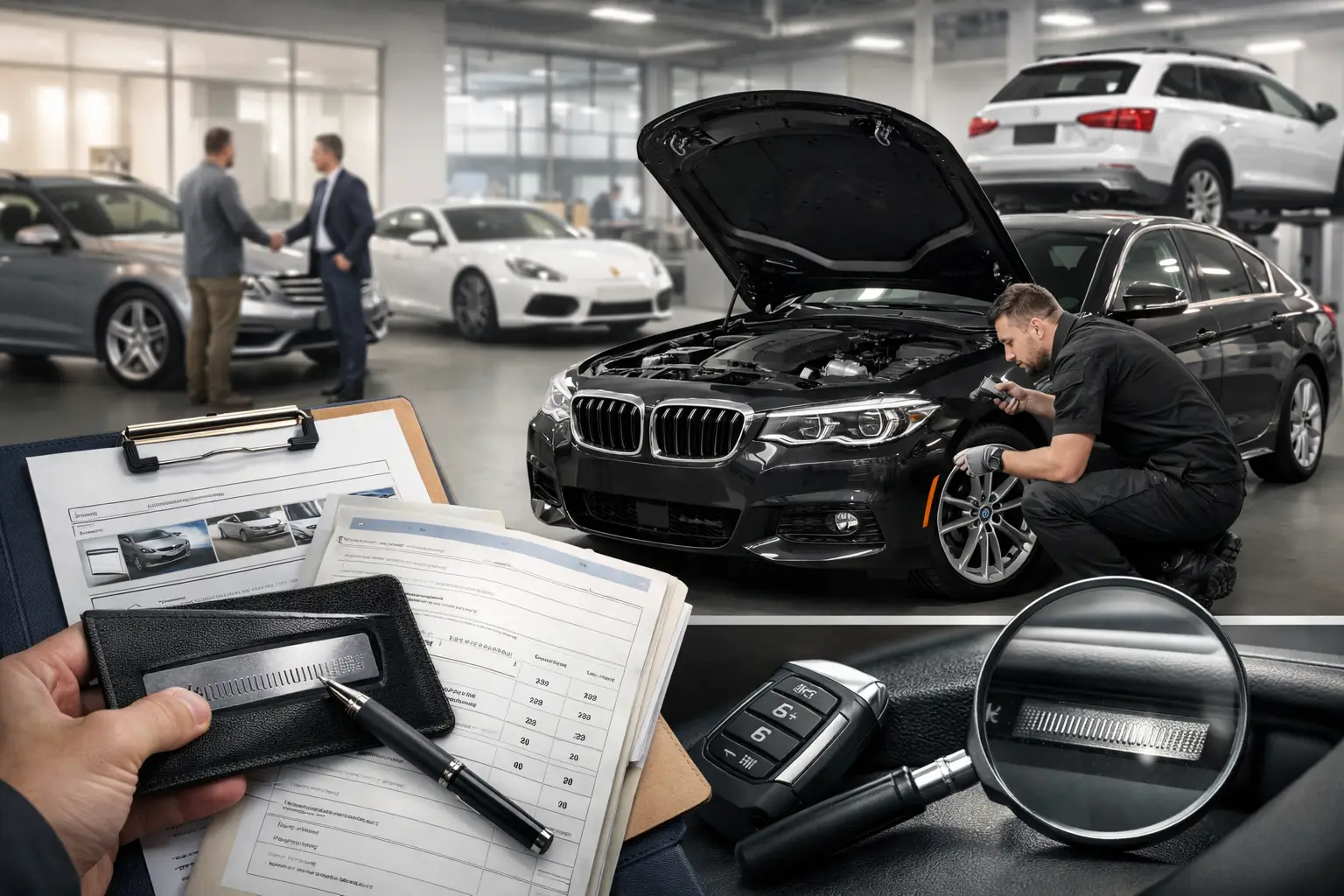
A used car can look right, drive well, and still hide the one detail that changes the whole deal: how it was actually maintained. That is why used car purchase verification matters before money changes hands, especially when the vehicle is advertised as fully serviced, dealer maintained, or carefully owned.
For many buyers, the mistake is relying on a seller’s summary instead of verifying the record behind it. A stamped booklet, a few invoices, and a confident listing description can sound reassuring. But if the official dealer service history does not support the story, you are buying based on trust alone. On a premium vehicle, that can become expensive very quickly.
What used car purchase verification should actually confirm
Real verification is not just checking whether a car exists on paper. It should confirm whether the maintenance history makes sense, whether mileage entries are consistent, and whether the vehicle appears to have been serviced in line with manufacturer expectations.
That matters because service history is often the clearest record of how a car was treated over time. A vehicle that returned regularly to authorized dealers usually leaves a more reliable trail. You can see recurring maintenance, mileage progression, and sometimes signs of unresolved gaps. A car with little or no verifiable dealer history is not automatically bad, but it carries more uncertainty.
For buyers looking at BMW, Mercedes-Benz, Audi, Porsche, Volkswagen, and other European brands, this point is even more important. These vehicles often depend on correct maintenance intervals, brand-specific servicing, and proper record keeping. If the dealership history is thin, missing, or inconsistent, the risk is higher than many buyers realize.
The biggest risks hidden by incomplete records
The problem with incomplete service history is not just missing paperwork. It is what those missing records prevent you from seeing.
A gap in dealership maintenance can mean the car was serviced elsewhere, which is not always an issue. Independent specialists can do excellent work. But if there is no supporting documentation, no dates, and no mileage trail, you are left guessing. Did the required maintenance happen on time? Were fluids, filters, and major interval services done correctly? Was the mileage progressing normally between visits?
Mileage inconsistency is another concern. A seller may present a current odometer reading that looks reasonable, but the historical service entries tell you whether the progression is believable. If recorded mileage jumps oddly, stalls for too long, or conflicts with what the seller claims, you have a problem worth investigating before purchase.
Then there is the broader question of ownership care. Dealer records often reveal patterns. Some cars were consistently maintained from year one. Others show early dealer visits and then long periods with no visible servicing at all. That does not prove neglect, but it changes the level of confidence you should have when pricing the car and deciding whether to proceed.
Used car purchase verification for premium vehicles
Premium used vehicles create a specific kind of buying risk. They often depreciate faster than the cost of maintaining them. That means a car may become affordable to buy while still being expensive to keep right.
This is where used car purchase verification becomes more than a box to check. It helps you separate a well-kept car from one that simply looks well presented. Clean paint, fresh detailing, and a polished listing can hide years of delayed servicing. Official dealer history gives you a more credible picture.
On vehicles from brands such as BMW, Mercedes-Benz, Audi, and Porsche, buyers often assume higher-spec models were better maintained. Sometimes that is true. Sometimes the opposite is true, especially when later owners tried to reduce upkeep costs. If the dealership service record is complete and consistent, that supports the value of the vehicle. If it is patchy or absent, the asking price should reflect the uncertainty.
What to verify before you commit
Before you agree to buy, focus on whether the records support the seller’s claims. If the listing says full dealer service history, you should be able to verify that history clearly. If it says recently serviced, the documentation should show when, where, and at what mileage.
You should also look at the spacing between service events. Long unexplained gaps deserve attention. So do repeated visits with similar mileage, missing years, or entries that do not fit the age of the car. The goal is not perfection. The goal is a believable, traceable maintenance timeline.
It is also worth paying attention to how the seller reacts when asked for verification. A serious seller usually understands why a buyer wants clarity. Evasive answers, vague explanations, or pressure to move quickly often signal that the history will not stand up to scrutiny.
Why official dealer history adds more confidence
There is a reason buyers place more weight on official dealer records than on generic paperwork. Dealer servicing data is tied to a brand network, recorded at the time of service, and usually structured around mileage and maintenance intervals. That makes it useful for verification.
It also helps cut through marketing language. Terms like well maintained or regularly serviced are meaningless without evidence. Official dealer history replaces opinion with documentation.
This does not mean dealer records tell you everything. A car may have been serviced outside the network for part of its life, and those records may still be legitimate. But when official dealer history exists, it gives buyers a stronger baseline. It is one of the fastest ways to assess whether the vehicle’s maintenance story holds together.
For that reason, platforms built around dealership servicing records offer a different level of insight. GetDealerHistory (getdealerhistory.com) focuses specifically on official dealer service history and dealership maintenance transparency, which is exactly the kind of information buyers need when evaluating a used vehicle with limited time and high financial exposure.
When a missing history is acceptable and when it is not
Not every car with gaps should be rejected. Context matters. A lower-value older car with some documented independent servicing may still be a fair purchase if the condition, mileage pattern, and price all line up.
But the standard should rise with the value of the vehicle. If you are spending serious money on a premium used car, missing or unverifiable history should carry more weight. The cost of being wrong is higher, and the records should support the seller’s valuation.
It also depends on the type of gap. A short break between recorded services is different from several years with no traceable maintenance. One missing invoice is different from a history that relies entirely on verbal assurances. Buyers get into trouble when they treat all gaps as minor.
Verification is also a pricing tool
One of the most practical benefits of verifying dealer history is that it improves negotiation. When the maintenance record is complete and consistent, you know what supports the asking price. When it is not, you have a factual reason to challenge value.
This matters because many used vehicles are priced as if their history is stronger than it really is. Sellers often ask premium money for cars described as cherished or meticulously maintained, even when the documentation is thin. Verification helps you separate genuine value from optimistic pricing.
That does not mean every inconsistency should kill the deal. Sometimes it should lead to a lower offer, more questions, or a pause while more documents are gathered. The key is that you are making the decision from evidence, not assumption.
The smarter standard for buyers
The used-car market rewards buyers who verify first and commit second. That is especially true when a vehicle’s value depends on how well it was maintained, not just how well it presents on the day you see it.
Used car purchase verification should give you a clear answer to one core question: does the service history support the car being sold to you? If the answer is yes, you can move forward with more confidence. If the answer is unclear, that uncertainty has a price.
The strongest buyers are not the ones who move fastest. They are the ones who know that official maintenance history is often the difference between a solid purchase and a costly surprise. Check the record, trust the evidence, and let the paperwork speak louder than the listing.