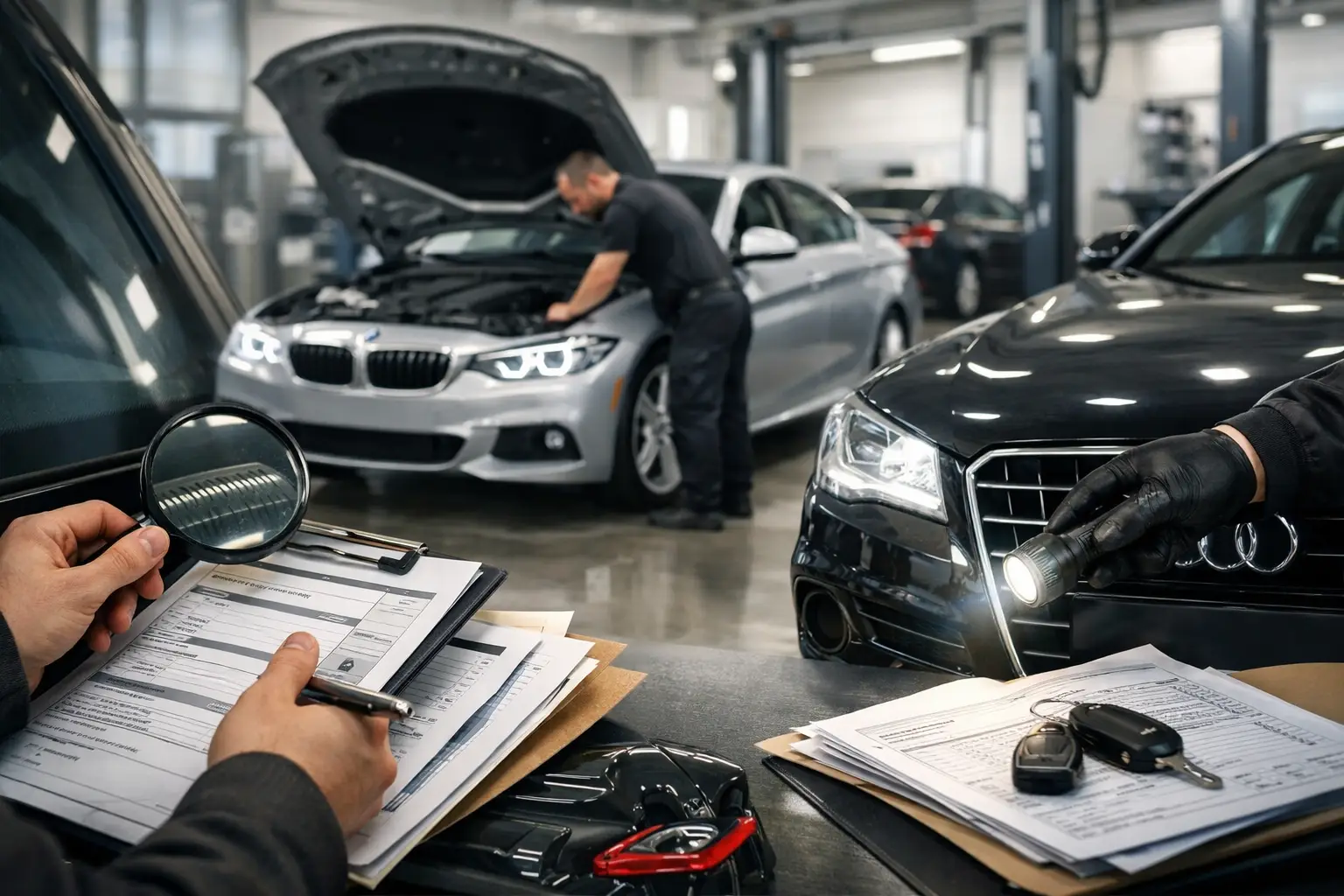
A used car can look right, drive fine for twenty minutes, and still be a very expensive mistake. If you want to know how to avoid buying a bad used car, stop focusing only on paint, tires, and a quick test drive. The real story is usually in the maintenance record, the mileage pattern, and the gaps a seller cannot explain.
That is where many buyers get caught out, especially with premium cars. A BMW, Mercedes-Benz, Audi, Porsche, or Volkswagen can feel like a bargain at first glance. But when routine servicing was skipped, delayed, or done inconsistently, the discount disappears fast. A polished exterior does not offset years of poor maintenance.
How to avoid buying a bad used car starts with records
Most bad used-car purchases happen for a simple reason: the buyer is forced to trust what they are told instead of what they can verify. Phrases like full service history or well maintained sound reassuring, but they are not proof on their own. You need to see whether the vehicle was actually serviced at the right intervals, whether mileage entries make sense, and whether the record shows consistent care over time.
Official dealer service history matters because it adds structure to the story. It can show when the car was inspected, what work was recorded, and whether the vehicle appears to have followed a normal maintenance path. For buyers looking at higher-value used vehicles, that context is not a bonus. It is risk control.
GetDealerHistory (getdealerhistory.com) focuses specifically on official dealer maintenance records and dealership servicing data, which helps expose issues a basic listing description will never show. That matters most when you are trying to separate a genuinely well-kept car from one that has simply been prepared for sale.
A clean interior tells you very little
Sellers know how to prepare a car visually. Seats get cleaned. Wheels get dressed. Engine bays get wiped down. Minor cosmetic flaws get minimized by lighting, camera angles, and timing. None of that tells you whether the transmission was serviced on time, whether brake fluid changes were ignored, or whether the car disappeared from the service network for years.
A bad used car often presents well in the short term. The warning signs are usually behind the scenes. Missing invoices. Large time gaps between services. Mileage jumps that do not fit the timeline. Repeated recommendations that were never followed. If you only evaluate what you can see on the day, you are buying the presentation, not the vehicle’s history.
That is why service transparency matters more than surface condition. Appearance helps you judge how a car was kept recently. Records help you judge how it was treated over its full life.
What a strong service history actually looks like
Not every good used car has a perfect binder full of paperwork. But a credible maintenance story usually has consistency. The dates line up. The mileage progression looks reasonable. The servicing pattern fits the age and use of the vehicle. If the car spent years inside dealer networks, that can give you a clearer view of what was done and when.
For premium brands, this is especially important. Complex engines, drivetrains, electronics, and suspension systems are less forgiving when maintenance slips. A car can drive smoothly today and still carry deferred servicing that becomes your problem next month. That is why buyers should pay attention not just to whether services happened, but whether they happened on time and through credible sources.
There is also a trade-off here. An older car with a well-documented, consistent record can be safer than a newer car with patchy history and vague explanations. Age alone is not the issue. Uncertainty is.
How to spot record gaps before they cost you
The biggest red flag is not always one major event. Sometimes it is silence. A service record that goes dark for long periods deserves a closer look. That does not automatically mean the car is bad, but it does mean the burden of proof gets higher.
Ask yourself a few practical questions. Was the vehicle serviced in a way that matches its mileage? Are there long stretches with no recorded maintenance? Does the seller explain those gaps clearly and confidently? Do the dates and mileage entries move forward in a logical way, or do they look irregular?
One gap may have a reasonable explanation. Several gaps, combined with unclear mileage history or missing supporting records, should change how you view the car. At that point, you are not deciding whether the seller seems honest. You are deciding whether the risk is worth absorbing.
This is where many buyers make an expensive mistake. They start negotiating price instead of deciding whether to walk away. A lower price does not fix an unverifiable history.
Mileage consistency matters more than the odometer number
A low odometer reading gets attention, but low mileage by itself does not make a used car safe to buy. What matters is whether the mileage fits the service timeline and the recorded maintenance pattern. If the car shows modest miles but the servicing history is sparse, incomplete, or inconsistent, that low number may not help you much.
Mileage consistency gives you context. It can support the car’s story or undermine it. If recorded service entries rise steadily and match the age of the vehicle, that is reassuring. If the pattern feels broken, unclear, or unsupported, you should slow down.
This matters for negotiation too. Buyers often overpay for a low-mileage example without asking whether that mileage is supported by a credible maintenance history. In practice, a slightly higher-mileage car with transparent dealer servicing can be the smarter purchase.
Seller claims should match the paper trail
A trustworthy seller should be able to explain the vehicle’s maintenance history without hesitation. If they say the car was dealer maintained, the records should support that. If they say major servicing was completed recently, there should be documentation. If they describe the car as meticulously cared for, the timeline should reflect that standard.
When the words and the records do not match, believe the records.
This does not have to be confrontational. It is simply disciplined buying. Ask direct questions and compare every answer to the available documentation. If the explanation changes, becomes vague, or leans too heavily on promises instead of proof, step back. A good used car should not require you to fill in the blanks.
Why premium used cars need more scrutiny
The higher the vehicle’s original complexity, the more expensive poor maintenance becomes. That is why buyers in the premium segment need to be especially careful. A luxury badge can hide neglected servicing just as easily as it can signal quality.
For example, cars from BMW, Mercedes-Benz, Audi, Porsche, and Volkswagen often depend on strict maintenance schedules to stay reliable over time. Missed fluid services, delayed inspections, and incomplete dealer records can signal a vehicle that was run on appearance instead of care. Even if it drives well now, deferred maintenance may already be building underneath the surface.
This is not a reason to avoid premium used cars. It is a reason to verify them properly. When the service history is transparent and consistent, a premium used vehicle can be a strong buy. When the record is vague, every promise becomes less valuable.
How to avoid buying a bad used car when time is tight
Many bad decisions happen because the buyer feels pressure. Another person is interested. The seller wants a deposit today. The listing has been framed as a rare opportunity. Under pressure, people skip verification steps and tell themselves they will sort out the details later.
That is exactly backward. The faster the decision window, the more important the records become. Service history is one of the quickest ways to pressure-test a vehicle before money changes hands. If the record supports the story, you move forward with more confidence. If it exposes inconsistencies, you save yourself from buying a problem.
Speed matters, but speed without verification is how buyers inherit hidden costs.
The smartest used-car buyers verify before emotion takes over
Every used car purchase has some uncertainty. The goal is not to eliminate all risk. The goal is to avoid obvious, preventable risk by checking the one area that reveals how the vehicle was really treated.
That means looking past the listing, past the seller’s pitch, and past the short test drive. It means asking whether the maintenance history is official, consistent, and believable. It means recognizing that an incomplete service story is not a small detail. It is often the clearest warning you will get.
If a car cannot back up its condition with credible dealer servicing and mileage consistency, you do not need a better excuse to pause. You need a better car.
The best used-car decision is often the one that feels slightly less exciting in the moment and much safer a month later.