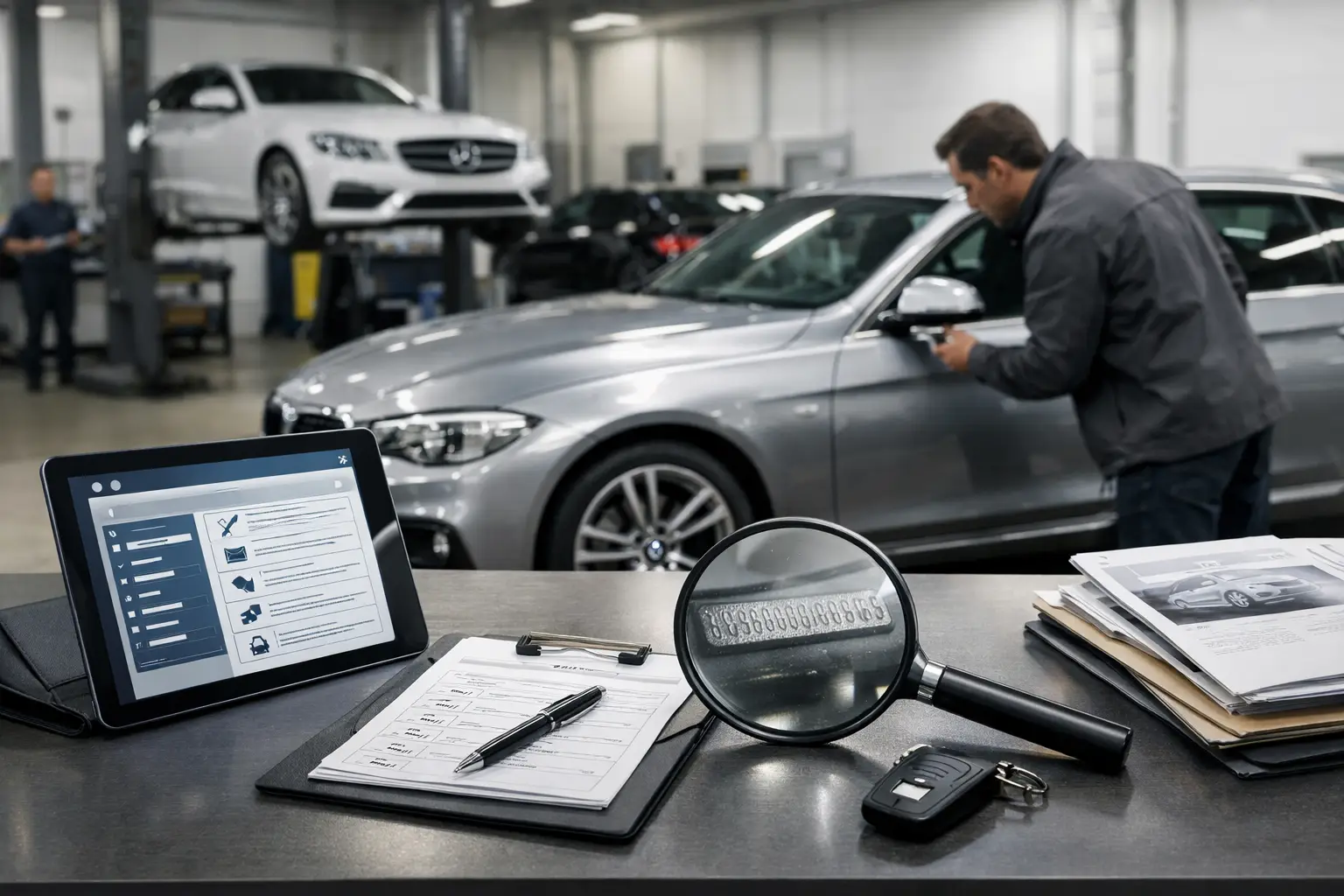
A seller says the car has "full service history." That sounds reassuring until you ask where the records came from, who performed the work, and whether the mileage lines up from one visit to the next. This is where official service records by VIN matter. They give you a clearer view of how a vehicle was actually maintained, not just how it is being described in the listing.
For used and premium vehicles, that difference is critical. A stamped booklet, a few invoices, or a verbal claim from the seller can be incomplete, selective, or impossible to verify. Official dealer-backed records tied to the VIN can expose service gaps, confirm maintenance patterns, and help you spot inconsistencies before money changes hands.
What official service records by VIN actually show
A VIN is the vehicle's unique identifier. When dealer servicing is logged against that VIN, it can create a traceable maintenance timeline. That timeline may include routine servicing, scheduled maintenance, mileage at the time of service, dealer visit dates, and the type of work completed.
The value is not just in seeing that the car was serviced. The value is in seeing who serviced it, when it happened, and whether the pattern makes sense. A car that visited authorized dealers regularly over several years tells a very different story from a car with long gaps, scattered paperwork, or records that appear only right before sale.
For brands like BMW, Mercedes-Benz, Audi, Porsche, and Volkswagen, dealer records can be especially useful because many owners rely on official dealer networks for scheduled maintenance. That creates a stronger record trail than seller-supplied paperwork alone.
Why dealer-backed history matters more than seller paperwork
Seller paperwork can still be useful, but it has limits. Documents get lost. Some owners keep only major repair invoices. Others service the car but cannot prove the work was done on schedule. In some cases, the records presented are real but incomplete, which can be just as misleading as having no history at all.
Official service records by VIN give you a more objective reference point. If the vehicle was maintained through authorized dealers, those entries can help confirm that the servicing timeline matches the seller's claims. They can also highlight where the story falls apart.
That matters most when you are assessing risk. A used vehicle with consistent official servicing often suggests stronger ownership care. A vehicle with missing periods, irregular mileage progression, or no dealer trace during key years may need much closer scrutiny. It does not automatically mean the car is bad. It does mean you should stop treating the seller's description as proof.
What these records can help you verify
The most immediate benefit is maintenance transparency. You can often see whether scheduled services happened at sensible intervals or whether the car appears to have gone too long without documented care. On premium vehicles, skipped maintenance can become expensive fast.
Mileage consistency is another major factor. If dealer entries show mileage increasing normally over time, that supports the vehicle's story. If the mileage pattern looks unusual, or if there are unexplained jumps and gaps, you have a reason to ask harder questions.
These records can also help you judge long-term ownership behavior. Some cars were serviced on time, at the right places, throughout their lifespan. Others show signs of neglect, irregular attention, or last-minute preparation for sale. The difference affects reliability, resale strength, and your negotiating position.
The limits of official service records by VIN
This is where buyers need to stay realistic. Official records are powerful, but they are not magic. They depend on where the vehicle was serviced and how the data was recorded.
If an owner used independent workshops for part of the car's life, those visits may not appear in official dealer history. That does not always mean the maintenance was missed. It means your visibility is reduced. You may be seeing only part of the picture.
Coverage can also vary by brand, market, and age of vehicle. Some cars have excellent digital dealer histories. Others have thinner records due to older systems, regional differences, or inconsistent dealer data practices. This is why absence of records should raise caution, not instant assumptions.
The key is to read what is present and what is missing together. Strong dealer history supports confidence. Weak or fragmented history increases uncertainty. The more expensive the vehicle, the more that uncertainty matters.
How to use official service records by VIN before buying
Start with the seller's claim, then test it. If the listing says full dealer history, look for records that support full dealer history. If the seller says the car was always maintained on time, check whether the service timeline reflects that.
Next, look at spacing. Regular servicing over time usually looks orderly. Long silent periods deserve attention, especially on higher-mileage or older premium vehicles where maintenance discipline matters most.
Then look at mileage progression. Service entries should generally move forward in a normal pattern. If something feels off, it may not be an immediate deal-breaker, but it should change the way you evaluate the vehicle.
Finally, use the history to frame better questions. Instead of asking, "Has it been serviced?" ask why there is a two-year gap, why the last documented visit was years ago, or why the mileage pattern does not match the current presentation. Verified records turn vague conversations into specific ones.
Why this matters more for premium used cars
Not every used car buyer needs the same level of verification. But when you are looking at a BMW, Mercedes-Benz, Audi, Porsche, or Volkswagen, maintenance history carries more weight because the cost of deferred servicing is often higher.
A premium vehicle can look clean, drive well on a short test, and still hide years of inconsistent care. Cosmetic condition is easy to stage. Official maintenance history is harder to fake. That makes it one of the most practical tools for separating a well-kept vehicle from one that only looks the part.
This is also why serious buyers increasingly check official dealer history before arranging payment or finalizing a deal. It reduces guesswork. It gives context to mileage. It exposes weak spots in seller narratives. Most importantly, it helps you avoid paying a premium price for a vehicle with a questionable maintenance background.
When a missing history should change your decision
It depends on the vehicle, the price, and the seller's explanation. A missing or partial dealer history does not always mean you should walk away. Some cars were genuinely maintained outside dealer networks by reputable specialists. Some owners simply did not preserve paperwork well.
But the more a seller leans on words like "perfect," "meticulously maintained," or "full history," the more important verification becomes. If those claims are not supported by traceable records, your confidence should drop.
For high-value used cars, uncertainty has a cost. You may face maintenance catch-up, reduced resale appeal, or hidden wear that should have influenced the purchase price from the start. Verified servicing history helps you price the risk instead of guessing at it.
Where GetDealerHistory fits in
GetDealerHistory (getdealerhistory.com) focuses on one thing many generic vehicle-check platforms miss: official dealer maintenance visibility. That matters when you want more than broad background data and need real insight into how a car was serviced throughout its life.
For buyers comparing premium used vehicles, that type of verification can be the difference between a confident purchase and an expensive assumption. Instead of relying on seller phrasing or incomplete paperwork, you get a clearer basis for evaluating maintenance consistency, mileage logic, and ownership care.
A used car does not need a perfect record to be worth buying. It does need a believable one. When official service history supports the story, confidence goes up. When the timeline breaks down, you have a chance to catch the risk before it becomes yours.