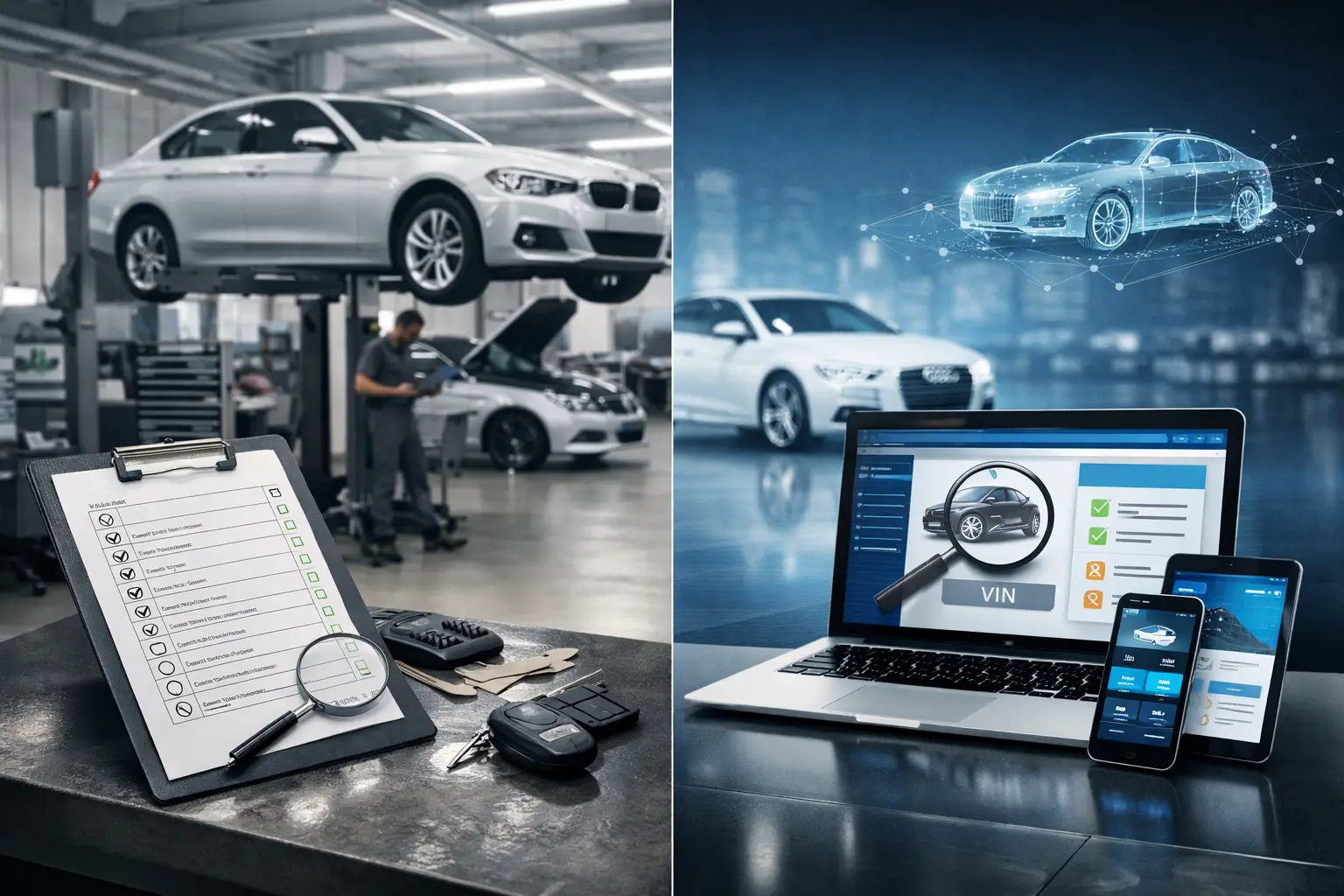
A used BMW with a stamped service book can still hide long gaps in maintenance. A clean-looking vehicle history report can still miss how the car was actually cared for. That is why dealer service history vs CarVertical is not a small comparison - it goes straight to the quality of the information you are using to judge risk before you buy.
If you are looking at a premium or higher-value used car, the question is simple. Do you want a broad history snapshot, or do you want evidence of official servicing? Those are not the same thing, and treating them as interchangeable can lead to expensive mistakes.
Dealer service history vs CarVertical: what are you actually checking?
Dealer service history is focused on maintenance performed within official dealer networks. That can include service dates, recorded mileage at service visits, maintenance intervals, workshop entries, and other brand-linked servicing data. For buyers, this matters because it shows whether the vehicle was maintained in line with manufacturer expectations and whether the timeline looks consistent.
CarVertical is a broader vehicle history platform. Its reports generally aim to collect information from multiple databases and sources, then present a wider overview of a car's recorded past. Depending on the vehicle and market, that may include mileage records, registration-related data points, and other historical entries.
The key difference is depth versus breadth. Dealer service history is narrower, but often more useful when your main concern is maintenance quality. CarVertical is wider in scope, but it may not tell you much about whether the engine, gearbox, brakes, or scheduled services were handled properly over time.
Why dealer records matter more than many buyers realize
A used vehicle does not fail because a database says it once existed. It fails because maintenance was skipped, delayed, or done inconsistently. That is where official dealer records have an edge.
When a car has been serviced through a dealer network, those entries can create a more credible maintenance timeline. You may see whether oil services were carried out at sensible intervals, whether mileage progression makes sense, and whether the owner followed routine servicing rather than only fixing problems when warning lights appeared.
That is especially important for BMW, Mercedes-Benz, Audi, Porsche, and Volkswagen models. These vehicles can remain excellent buys when maintained correctly. They can also become expensive quickly when servicing has been neglected. A general history report may hint at mileage points or registration events, but it often does not answer the more valuable question: was this car actually looked after properly?
What CarVertical can do well
A fair comparison matters here. CarVertical is not trying to be the same thing as official dealer maintenance verification. Its strength is giving buyers a wider historical snapshot from aggregated data sources.
That can be useful as an early screening tool. If you are comparing several vehicles and want to spot obvious inconsistencies, a broader report may help you narrow the field. It can also be helpful when dealer history is unavailable, incomplete, or not accessible for a particular brand or market.
In other words, CarVertical may help you identify that a vehicle deserves more scrutiny. But that is different from proving the quality of its servicing.
Where CarVertical often falls short for maintenance transparency
The biggest limitation is simple: broad vehicle history data is not the same as official dealer servicing data.
A report can show scattered mileage entries without showing what work was done at those points. It can show timeline markers without confirming whether scheduled maintenance was missed for years. It can suggest a vehicle has records, but those records may not tell you enough about the standard of care.
For buyers trying to reduce risk, that gap matters. A premium used vehicle is not just an asset with a date trail. It is a machine with service requirements. If you cannot verify how it was maintained, you are still making a decision with a major blind spot.
This is where many buyers get false confidence. They see a polished report, assume the car is transparent, and move forward. But maintenance neglect often hides behind that kind of surface-level comfort.
Dealer service history vs CarVertical for mileage verification
Mileage is one area where both types of checks can have value, but they work differently.
Dealer service history can be powerful because mileage is often recorded during routine dealer visits. That creates a maintenance-linked mileage trail. If the car was serviced regularly, those entries can show whether the odometer progression is consistent over time. If there are large unexplained gaps, repeated delays, or figures that do not line up, that is useful intelligence.
CarVertical may also surface mileage-related entries from its data sources. The benefit is broader coverage across multiple record types. The trade-off is that these entries may be less tied to actual maintenance events, and the density of data can vary by vehicle, country, and reporting availability.
So which is better for mileage verification? It depends on what you need. If you want a broad warning signal, an aggregated history report may help. If you want mileage tied to real servicing behavior, dealer history is usually the stronger source.
Which one is better before buying a premium used car?
If you are choosing between the two for a BMW 5 Series, a Mercedes E-Class, an Audi A6, or a Porsche Macan, dealer service history is usually more relevant to the decision that matters most: how well the car was maintained.
That does not mean broad history platforms have no place. It means they answer a different question. CarVertical can help provide general background. Dealer service history helps assess ownership care, servicing discipline, and maintenance consistency.
For a lower-risk purchase, maintenance evidence tends to carry more weight than generalized history summaries. Buyers often focus on visible condition, seller confidence, and report layout. Experienced buyers focus on the service trail.
A car that looks perfect but has weak or inconsistent servicing should be treated carefully. A car with strong official maintenance records often tells a more reassuring story, even if the seller's listing is less polished.
Why official dealer data changes the negotiation
Verified dealer records do more than reduce uncertainty. They give you leverage.
If the service history is complete and consistent, you have stronger grounds to justify the asking price. If there are missing intervals, unexplained mileage gaps, or signs the vehicle fell out of the dealer network for long periods, you can question the seller with specifics.
That is far more effective than vague concerns. It moves the conversation from opinion to evidence.
This is exactly why services built around official maintenance verification matter. GetDealerHistory (getdealerhistory.com) is designed for buyers who want dealership-backed servicing insight rather than just a generic report. For anyone buying a premium or high-value used car, that distinction is practical, not academic.
The right way to think about this comparison
The mistake is asking which platform is universally better. The better question is which type of data is more useful for the risk you are trying to reduce.
If your main goal is broad background context, CarVertical may be useful. If your main goal is verifying maintenance quality, dealer service history is usually the stronger choice. If you care about reliability, future repair exposure, and whether the previous owner actually followed servicing schedules, official dealer records are often the more decisive source.
That is why dealer service history vs CarVertical is really a question of intent. One helps with general history screening. The other helps you judge how the vehicle was cared for.
For many used-car buyers, especially in the premium market, that second question is the one that protects them most.
Before you trust the seller's story, look for the maintenance trail behind it. A vehicle's real value is not just in how it looks today - it is in how consistently it was looked after when no one was trying to sell it.